
Coloring and activity book · Ages 5 to 8
Benny Misses Daisy
A Coloring Story About Love, Loss, and Remembering
Benny Misses Daisy: A Coloring Story About Love, Loss, and Remembering is a 55-page coloring and activity book for children ages 5 to 8 who are grieving a pet or another loved one. It follows Benny, a young golden pup, and Emma, their girl, as they miss Daisy, an older golden dog who has died, and find gentle ways to remember her. Written by Adam S. Dince and self-published under Wagglewood, it is available as a paperback on Amazon and as a printable digital download on Etsy.

Watch the Benny Misses Daisy explainer

| Title | Benny Misses Daisy |
|---|---|
| Subtitle | A Coloring Story About Love, Loss, and Remembering |
| Author | Adam S. Dince |
| Age range | 5 to 8 years |
| Pages | 55 |
| Formats | Paperback on Amazon; printable digital download on Etsy |
| Topic | Grief and loss, pet loss, remembering |
| Publisher | Wagglewood (self-published) |
| Publication date | October 13, 2026 |
| ISBN | 979-8162059677 |
What is Benny Misses Daisy about?
Benny loved playing with Daisy, and Emma loved them both very much. Then one day everything felt different. Daisy died, and everyone missed her very much.
Benny looks for Daisy in all her favorite places and wonders why she isn't there. Their home feels quieter. Emma cries sometimes because she misses Daisy too. With help from a grown-up who listens, they talk about Daisy, make a memory box, draw a picture, take walks again and plant flowers to remember her.
Along the way they learn that sadness and joy can both be part of a day, and that smiling does not mean Emma loved Daisy less. They find new happy moments, and Daisy stays part of their story.
Who are the characters?
What activities are inside?
Throughout the story, children get pages where they can color, draw and write:
There is also a “This book belongs to” page and a calming page that says, “Breathe in slowly; breathe out gently.”
Is it only for pet loss?
No. The story is about a dog, but the feelings are universal. Children can use it after losing a pet, a family member or someone else they love.
Peek inside Benny Misses Daisy
These are real pages from the book: black and white line art, ready to color. Tap a page to see it larger.
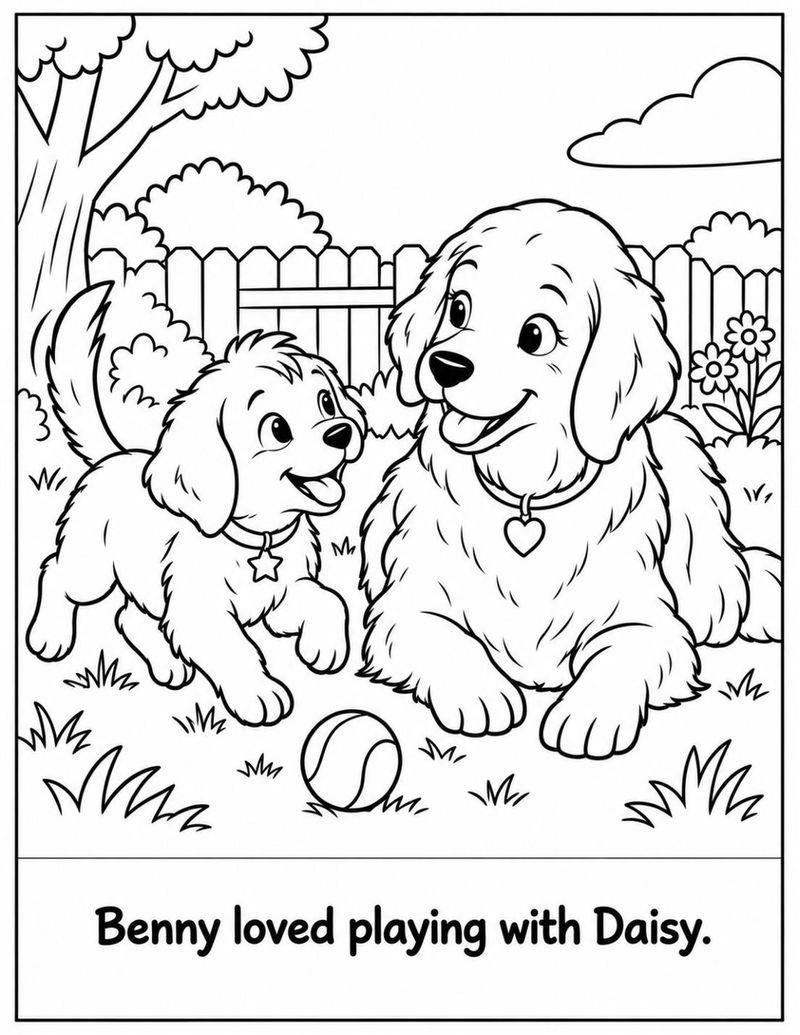
Story pageBenny loved playing with Daisy. 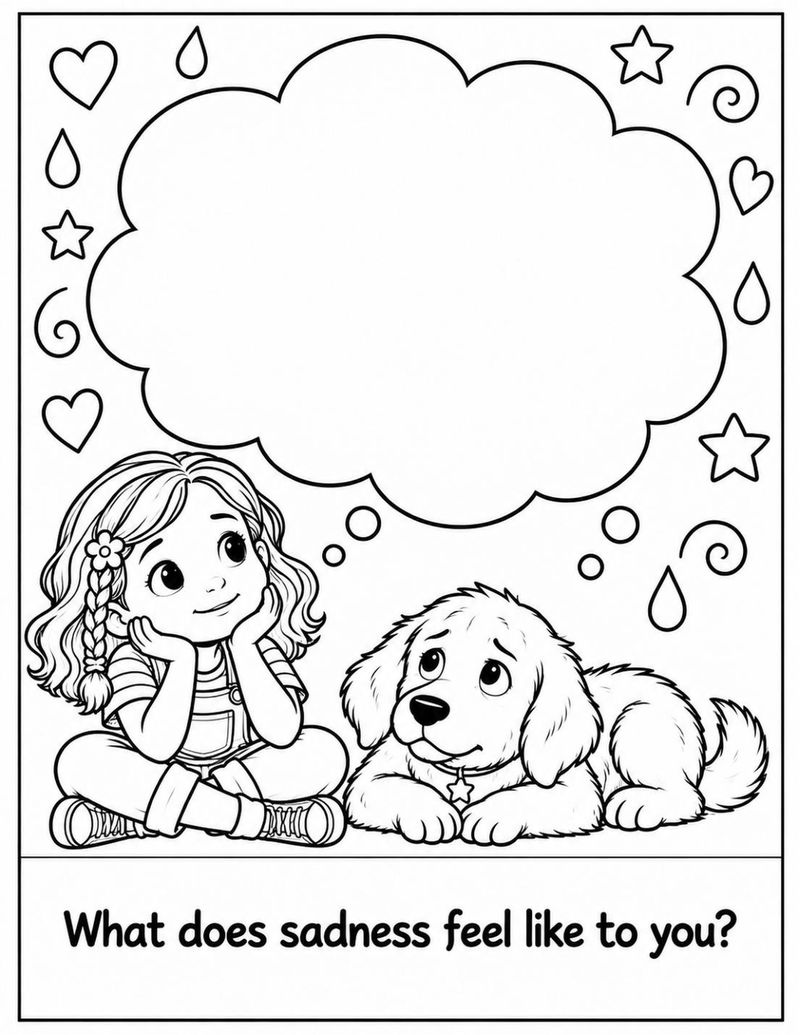
Activity pageWhat does sadness feel like to you? 
Activity pageFill this heart with happy memories. 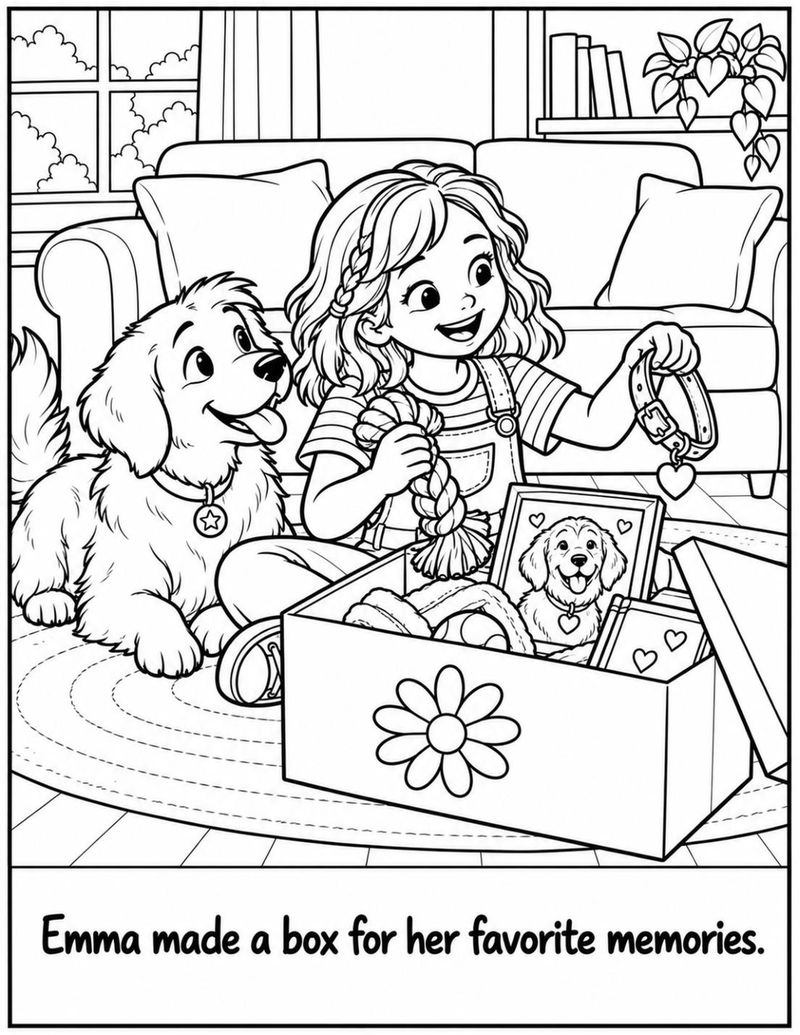
Story pageEmma made a box for her favorite memories. 
Activity pageDraw a happy memory inside this frame. 
Story pageLove and memories stay with us.
How do you use Benny Misses Daisy?
There is no right or wrong way to use this book.
- Start with the story.Read the whole book aloud before any coloring. Older children may prefer to read it on their own. There is no need to stop and color each page as you read.
- Return to color and explore.Revisit the pages together. Invite your child to color the pictures and fill in the activities at their own pace.
- Let conversations happen naturally.Follow your child's lead. You can gently ask: How do you think Benny is feeling? Have you ever felt that way? What's a favorite memory you have of someone you love? What makes you feel better when you're sad?
- Take your time.You do not need to finish in one sitting. Some days your child may want to talk. Other days they may simply want to color. Both are okay.
- Remember that love continues.The goal is not to make sadness disappear. It is to help children recognize their feelings, express themselves, and discover that the love and memories we share can remain part of our lives.
What should I color it with?
Crayons or colored pencils work best. If you use markers, place an extra sheet of paper under the page you are coloring.
More help for grown-ups is in the guide for parents and caregivers.
Questions parents ask about Benny Misses Daisy
How do I talk to my child about the death of a pet?
Use clear, age-appropriate words, answer questions as honestly as you can, and let your child know that sadness is natural. You do not need to have every answer. A story and a quiet activity like coloring can give you both something to do while you talk, and Benny Misses Daisy is made for exactly that.
What age is Benny Misses Daisy for?
It is written for children ages 5 to 8. Grown-ups can read the story aloud first, and older children may prefer to read it on their own before coloring.
Is Benny Misses Daisy only about pets?
No. The story is about a dog, but the feelings in it are universal: missing someone, feeling different, crying, remembering and finding new happy moments. Children can use it after losing a pet, a family member or someone else they love.
Can a child use this book after losing a grandparent or another loved one?
Yes. Several activity pages ask about "your loved one" and "someone you miss", so a child can fill them in for a grandparent, a friend or anyone special. On the page that asks what they would tell Daisy, a child can simply write to their own person instead.
Is the story too sad for a young child?
The story is honest that Daisy died and that everyone missed her very much, and it stays gentle. Emma and Benny talk about Daisy, make a memory box, take walks again and plant flowers, and they find new happy moments. Reading it yourself first can help you decide whether it suits your child.
What is the difference between the paperback and the digital version?
The paperback is a printed book that Amazon ships to you. The digital version is a printable download from Etsy: you print the pages at home, and nothing is shipped.
What should I use to color Benny Misses Daisy?
Crayons or colored pencils work best. If you use markers, slip an extra sheet of paper under the page you are coloring so the ink does not reach the next picture.
Is this book a replacement for therapy or counseling?
No. Benny Misses Daisy opens conversations and gives children a way to express their feelings through coloring, drawing and writing, but it is not a substitute for individualized mental health care. If your child's grief seems overwhelming or keeps getting in the way of daily life, talk with their doctor or a licensed mental health professional.
Where can I buy Benny Misses Daisy?
Not sure which to choose? Read the paperback and digital questions above.
Also from Wagglewood
Cora's First Day Jitters is a 58-page coloring story about courage, friendship and starting school. See all the Wagglewood coloring books.